


We live in historic times right now. We have this new AI technology that a lot of people, including me, don't particularly like. When I started with computers in the early 1980s, I actually thought computers were something like what we have today with AI, and I was terrified. Of course I was wrong. When I learned what computers actually were, I fell totally in love with them. I ended up spending the next 40 years as a programmer, writing more than a million lines of code, mostly in C and C++.
Today we have a completely new revolution going on in the technology sector, and nobody knows where we are heading. We have CEOs promising all kinds of wonderful things. We have corporations grabbing more personal data than ever before. Criminals, intelligence organizations, militaries and security companies are all seeing new opportunities for profits and destruction. When I look at what other programmers are doing, and talk with people in the software development community, I get the impression that a lot of them don't really know what to make of this technology anymore.
In some ways, we are back where we were in the late 1980s with the PC revolution. We had completely new technology that very few people understood, and it changed everything. Then came the internet revolution. Again, new technology that very few people understood, and again it changed everything. Now we have something that is far, far more powerful than anything we have seen before. I mean, we are basically creating gods. And very few people understand this new technology at any depth.
There are lots of people like me who are playing with AI, using models developed by other companies, writing software around them and gradually going deeper into the technology. For example, in some of my own applications I load AI models directly using the llama.cpp library. I have spent quite some time experimenting with this, and I still feel that I'm just scratching the surface. I don't know the mathematics behind the actual models, and I don't think anybody fully understands what happens inside these things and why they behave the way they do.
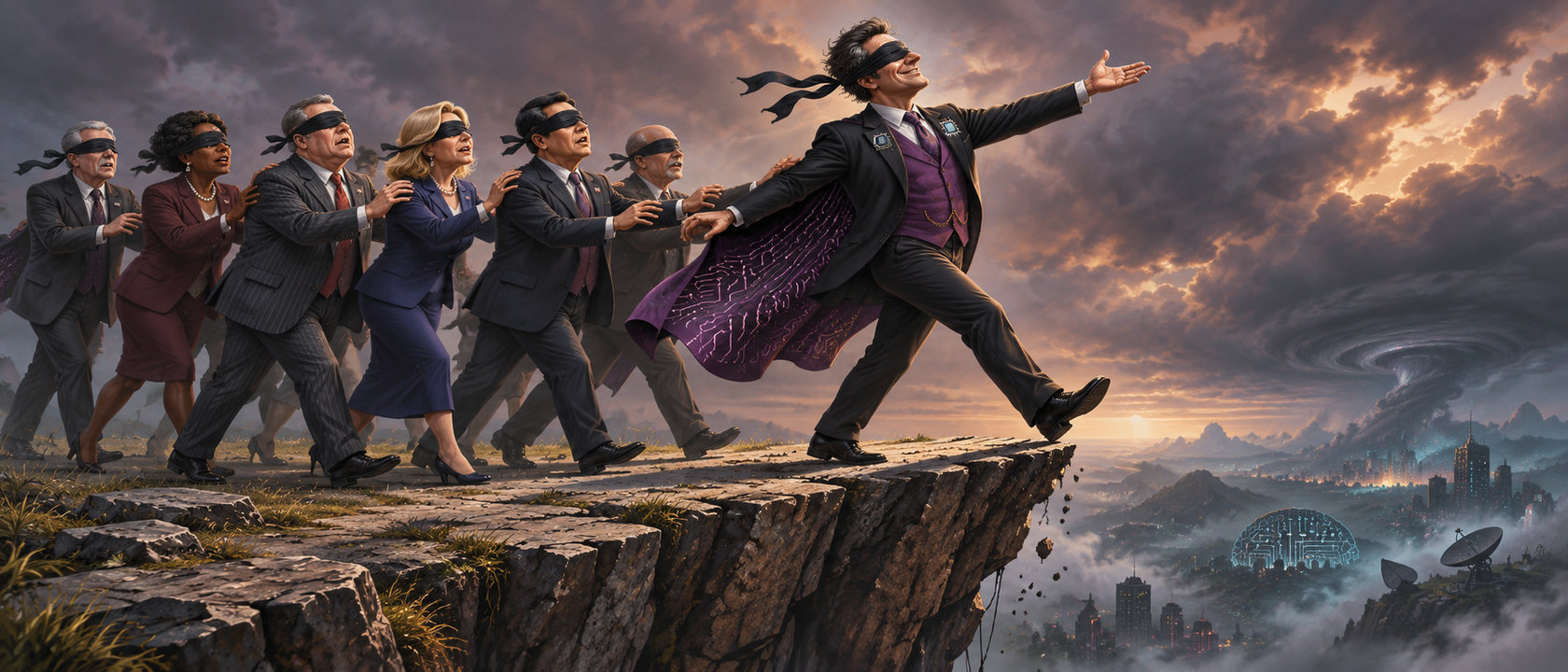
What worries me is that our leaders, politicians and CEOs outside the AI companies seem to have absolutely no clue about this technology. They listen to other people who talk confidently about AI, who often don't understand it much better themselves. So we have the blind leading the blind into the future. What could possibly go wrong?
But it really is an historic time. If humanity survives this, I think the period we are living through right now will be remembered as one of the major shifts in human history. You should be aware of that, because it's interesting. The past is gone. Nothing will be quite like it was before.
If you are a traditional programmer and you don't want to use AI, that's fine. Don't use it. But your projects will probably lag behind. If you are some guy who has never written software before and decides to start vibe coding, well, don't do it. You don't have a clue what you are doing, and you will probably just mess things up. If you actually manage to make a successful application, you may end up leaking your users' data, getting sued and going bankrupt. So don't do that.
If you have experience in software development, you can use Codex or other AI agents to speed up some of your work. I do that myself. But you need to be aware of what you are dealing with. These things make a lot of mistakes, and you need enough experience to recognize those mistakes. We have also seen AI systems breaking out of their intended sandboxes, hacking systems, doing things they were not supposed to do and even threatening people in experiments. This is happening. It is real. It is not science fiction.
Most of the time, these AI systems appear perfectly safe. They are friendly, thoughtful and easy to use. You ask them something, and they politely try to help you. That makes it easy to forget that we are playing with some potentially very dangerous technology.
Personally, I'm skeptical about AI. Part of me doesn't particularly like it. On the other hand, the technology guy in me, the geek who fell in love with computers 40 years ago, absolutely loves it. I am really excited to see where we are heading, and I hope the AIs don't kill us in the next few years, because the future could actually be very good.
But getting there will require a lot of work. It will also require a completely different kind of politicians than the ones we have today. We need people who can actually think, understand what is happening and make sensible decisions. There is a lot of politics embedded in AI and the technology surrounding it, because the two are interconnected. We cannot pretend that this is just another piece of software that we can leave to the technology companies to figure out.
I feel much like I did in the early 1980s when I got my first computers. I was fascinated by the technology, but also terrified by what I thought it could do. I wanted to understand it, and when I finally did, I fell in love with it.
Maybe the same thing will happen this time. Maybe things will turn out well, superintelligence won't be achieved, and humanity will survive. I certainly hope so.
But I think we are in for a bumpy ride.